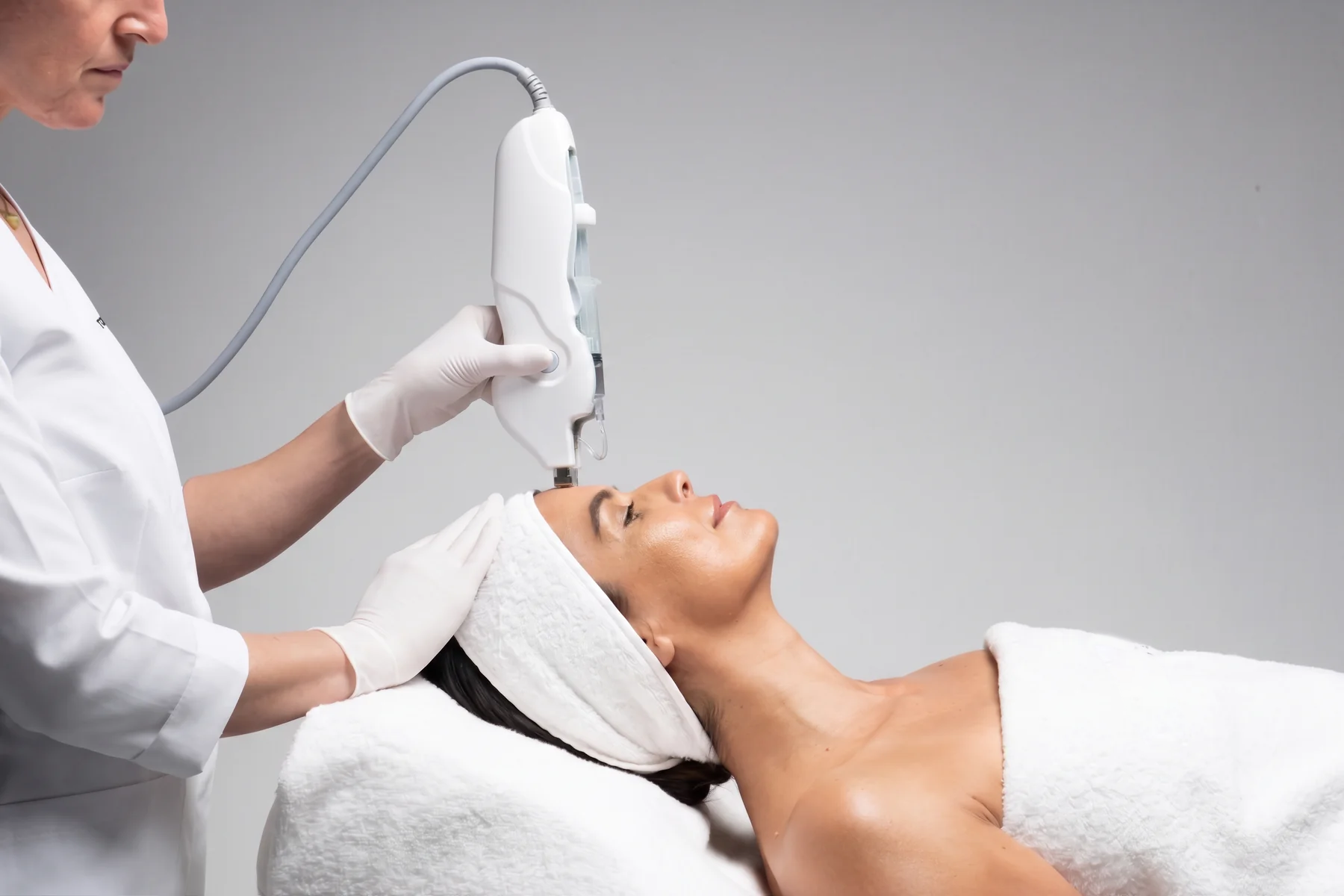
PDRN with Mesoject is a non-invasive aesthetic treatment focused on improving skin quality, hydration and appearance. At PRMEDICA, Lumicen PDRN is used with TKN Mesoject, an electroporation technology that supports needle-free transdermal application. A session lasts approximately 45–60 minutes, and the protocol is personalized to the skin’s characteristics.
Medically reviewed by Dr. Estefanía Jiménez
Last medical review: August 2026
At a glance
- Treatment: PDRN + Mesoject
- Method: Needle-free electroporation
- Duration: Approximately 45–60 minutes
- Sessions: Generally 3, personalized after evaluation
- Recovery: Little to no downtime; temporary redness or sensitivity may occur
Individual results vary.
What Is PDRN?
PDRN stands for polydeoxyribonucleotide. It is composed of purified fragments of DNA, traditionally obtained from salmon or trout.
The raw material undergoes extraction and purification before being incorporated into professional formulations. Therefore, the treatment should not be confused with applying salmon sperm directly to the skin.
PDRN is also different from:
- Stem cells
- Exosomes
- Collagen
- Hyaluronic acid fillers
- Botulinum toxin
- Gene therapy
PDRN does not work by adding facial volume like a filler. Its role in regenerative aesthetics is associated with biological pathways involved in skin repair, hydration and tissue quality.
Why Is PDRN Derived from Salmon DNA?
Salmon and trout have traditionally been used as sources of PDRN because their reproductive cells contain DNA that can be isolated and extensively purified.
The final ingredient consists of DNA fragments rather than living cells. It does not contain a complete or active organism and is not designed to alter a patient’s genetic material.
“Salmon DNA treatment” is therefore a simpler name for a professional formulation containing purified salmon-derived polydeoxyribonucleotides.
People with known fish allergies or sensitivities should disclose this information before treatment so the PRMEDICA team can determine whether the product is appropriate for them.
How May PDRN Support the Skin?
Researchers have proposed two principal pathways through which PDRN may interact with damaged or aging tissue.
Adenosine A2A receptor pathway
The breakdown products of PDRN may participate in signaling related to the adenosine A2A receptor.
In laboratory and early clinical research, this pathway has been associated with modulation of inflammation, fibroblast activity and processes involved in tissue repair.
Fibroblasts are cells that help produce structural components of the skin, including collagen and other elements of the extracellular matrix.
Nucleotide salvage pathway
As PDRN is broken down, it provides nucleotides and nucleosides that cells may reuse through the nucleotide salvage pathway.
This pathway allows cells to recycle some of the components needed for the synthesis and repair of nucleic acids, particularly when tissue has been exposed to stress or damage.
These mechanisms provide a scientific rationale for studying PDRN in regenerative medicine and dermatology. However, they should not be interpreted as proof that PDRN can reverse aging or guarantee complete cellular regeneration.
What Is Lumicen Ampoule?
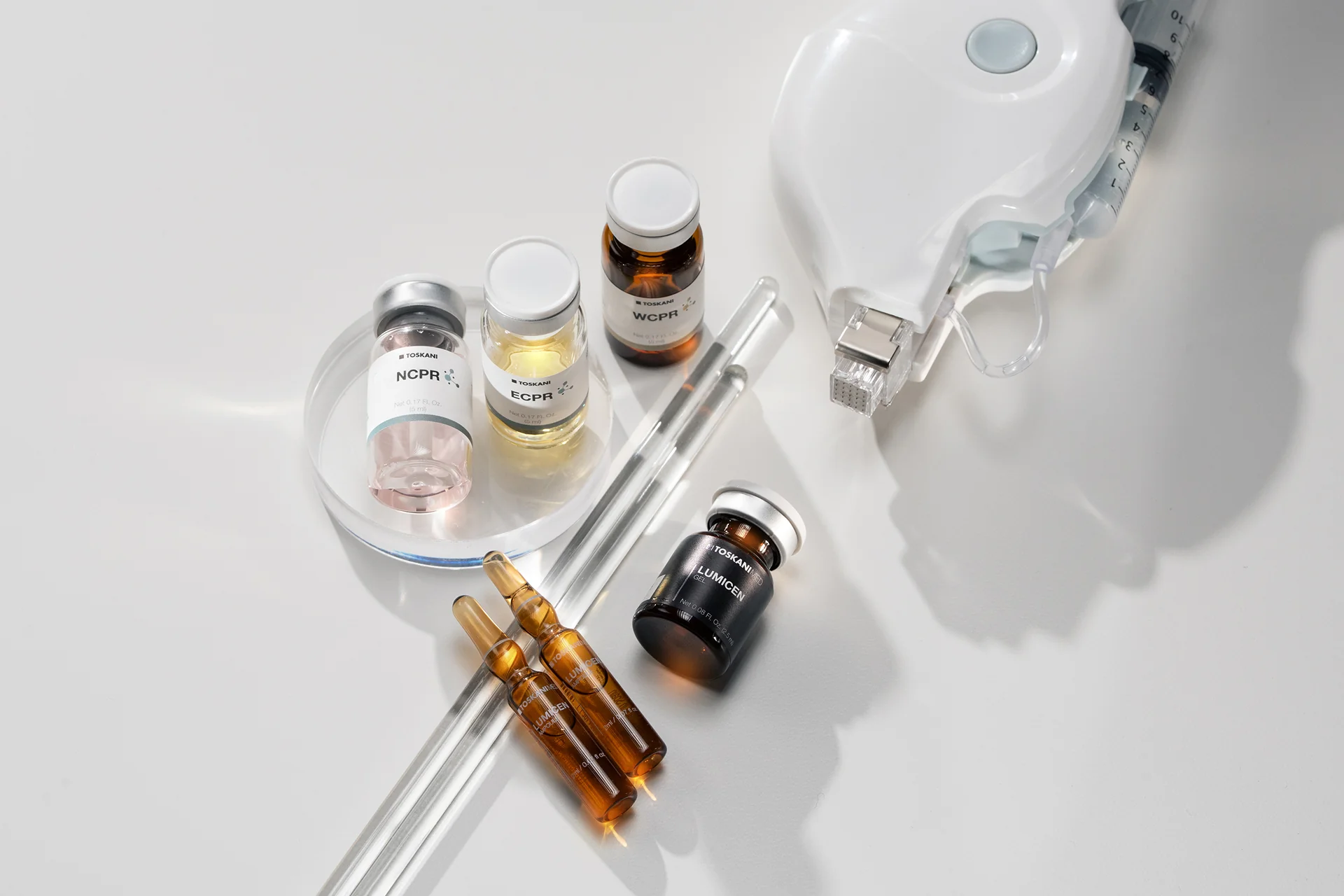
Lumicen is a professional mesotherapy formulation from Toskani. Its active ingredient is identified as Sodium DNA, a purified DNA-derived ingredient used in aesthetic protocols for skin showing dryness, dullness, localized fine lines or reduced elasticity.
At PRMEDICA, Lumicen ampoule is combined with Mesoject to apply the formulation without traditional injections.
The precise treatment area and protocol are selected according to the patient’s skin characteristics, concerns and professional evaluation.
How Does Mesoject Work Without Needles?
TKN Mesoject Gun is a professional transdermal delivery device developed by Toskani that uses electroporation.
Its Pulse Booster technology applies controlled electrical pulses to temporarily increase skin permeability. This is intended to help compatible active ingredients penetrate more effectively than they would through conventional topical application alone.
Mesoject does not inject the Lumicen solution. It also does not use needles to create the controlled microinjuries associated with microneedling.
This distinction is important because the method of delivery influences penetration, patient experience, recovery and expected results.
| Treatment method | How the product is delivered |
|---|---|
| Conventional topical application | The product is applied to the surface of the skin |
| Mesoject (electroporation) | Electrical pulses temporarily increase skin permeability without needles |
| Microneedling | Fine needles create controlled microchannels in the skin |
| Injectable mesotherapy | Small injections deposit the product directly into the skin |
Needle-free delivery should not be described as identical to injectable mesotherapy. It is a different approach intended for patients seeking a comfortable and non-invasive skin treatment.
What Are the Potential Benefits of PDRN with Mesoject?
Depending on the condition of the skin and the individual treatment plan, PDRN with Mesoject may help support:
- Improved skin hydration
- A smoother-looking texture
- A more radiant and refreshed appearance
- The appearance of greater elasticity and firmness
- Softer-looking fine lines
- A more even-looking complexion
- Overall skin quality
- Maintenance between other aesthetic treatments
The treatment is intended to produce gradual and natural-looking improvements rather than dramatic changes in facial structure.
Individual results vary, and no specific outcome can be guaranteed.
Interested in PDRN + Mesoject? Our team can guide you based on your goals and skin characteristics.
What Areas Can Be Treated?
Lumicen with Mesoject can be adapted to different skin areas following professional evaluation.
Common areas that may be considered include:
- Face
- Neck
- Décolleté
- Areas with visible dryness or dullness
- Areas showing early signs of skin aging
Because skin thickness, sensitivity and treatment goals differ between areas, the provider must select the appropriate settings and protocol for each patient.
What Happens During a PDRN and Mesoject Session?
A typical appointment at PRMEDICA lasts approximately 45 to 60 minutes.
The specific steps may vary, but the experience generally includes:
- A professional evaluation of the skin and treatment goals.
- Cleansing and preparation of the selected area.
- Application of the Lumicen ampoule.
- Use of Mesoject to support transdermal delivery.
- Application of appropriate post-treatment skincare and sun protection.
Because the procedure does not involve injections, it is generally well tolerated. Patients may feel light tapping, pressure or a mild electrical sensation while the device is working.
How Many Sessions Are Recommended?
PRMEDICA generally recommends a series of three PDRN with Mesoject sessions.
The interval between appointments and any future maintenance sessions should be personalized according to:
- Skin condition
- Age and visible signs of aging
- Treatment area
- Sensitivity
- Response after each session
- Other aesthetic procedures included in the patient’s plan
Some patients may notice improved hydration or radiance before completing the series, while changes in texture and overall skin quality may develop more gradually.
Is There Any Downtime?
Mesoject is designed as a non-invasive treatment with little to no recovery time.
Most patients should be able to return to their regular activities after the appointment. However, temporary redness, warmth or sensitivity may occur depending on the skin and the products used.
Patients should follow the aftercare instructions provided by PRMEDICA, including appropriate sun protection and temporary avoidance of irritating skincare ingredients when indicated.
Who May Be a Candidate?
PDRN with Mesoject may be considered by adults who want to improve skin quality without injections, particularly those concerned about:
- Dehydrated or dull-looking skin
- Uneven texture
- Early fine lines
- Reduced elasticity
- A tired-looking complexion
- Preventive skin maintenance
- A non-invasive option with minimal downtime
The treatment is not automatically appropriate for every patient.
A professional evaluation is especially important for people with active skin infections, uncontrolled dermatological conditions, known allergies to the formulation, implanted electronic devices or other medical considerations that could affect treatment with an electrical-based aesthetic device.
Pregnant or breastfeeding patients should also discuss aesthetic treatments with their physician before proceeding.
PDRN with Mesoject vs. Fillers and Botulinum Toxin
These treatments have different objectives and should not be considered interchangeable.
Botulinum toxin temporarily reduces the muscular activity responsible for certain expression lines. Dermal fillers restore or modify volume in specific facial areas.
PDRN with Mesoject does neither of these things. It focuses on the condition and appearance of the skin itself.
For some patients, PDRN may be used as a stand-alone skin-quality treatment. For others, it may form part of a broader personalized aesthetic plan.
What Does the Scientific Evidence Say?
PDRN and related polynucleotide formulations have been investigated in wound healing, tissue repair and aesthetic medicine.
Early clinical studies involving injectable polynucleotides have reported promising changes in hydration, elasticity, texture, fine lines and patient satisfaction. Nevertheless, the available studies generally involve small populations, different formulations and varied injection protocols.
A 2025 systematic review concluded that polynucleotides have promising potential in aesthetic medicine but also emphasized the need for larger, standardized and higher-quality studies.
It is equally important to recognize that most published aesthetic evidence concerns injected PDRN or polynucleotides. Those findings cannot be transferred automatically to needle-free treatment.
Mesoject has a plausible transdermal delivery mechanism, but more independent clinical research is needed to determine the specific effects of combining this device with each individual PDRN formulation.
This is why PRMEDICA presents PDRN with Mesoject as a personalized skin-quality treatment rather than as a guaranteed solution or replacement for injectable procedures.
PDRN Skin Rejuvenation at PRMEDICA Los Cabos
PRMEDICA combines medical-spa care with a regenerative approach to aesthetics.
Every treatment begins with an evaluation of the patient’s skin, goals and relevant medical history. This allows the team to determine whether PDRN with Mesoject is appropriate or whether another option would better address the patient’s concerns.
The procedure takes approximately 45 to 60 minutes and is generally recommended as a series of three sessions.
Patients visiting Los Cabos can contact PRMEDICA before their trip to discuss availability and determine whether the recommended treatment schedule can be incorporated into their stay.
Interested in PDRN + Mesoject? Our team can guide you based on your goals and skin characteristics.
Frequently Asked Questions
Is PDRN really made from salmon sperm?
PDRN is commonly extracted from reproductive cells of salmon or trout, but the professional ingredient consists of purified DNA fragments. Raw salmon sperm is not applied to the patient’s skin.
Is PDRN a type of stem cell or exosome treatment?
No. PDRN consists of DNA fragments. Stem cells are living cells, while exosomes are extracellular vesicles involved in cellular communication. They are different biological products with different properties.
Is PDRN injected during this treatment?
No. PRMEDICA applies Lumicen ampoule with TKN Mesoject Gun, a needle-free device designed to enhance transdermal delivery using controlled electrical pulses.
Does the treatment hurt?
The procedure does not involve injections and is generally comfortable. Patients may feel tapping, pressure or a mild electrical sensation. Individual sensitivity can vary.
How long does a session take?
A PDRN with Mesoject appointment at PRMEDICA usually lasts approximately 45 to 60 minutes.
How many sessions are recommended?
PRMEDICA generally recommends three sessions. The timing between sessions and any future maintenance are personalized after evaluation.
When will I see results?
Some patients may notice changes in hydration and radiance relatively early, while improvements in texture and overall skin appearance may develop progressively. Results and timelines vary.
Is there downtime?
The treatment is designed to require little to no downtime. Temporary redness, warmth or sensitivity may occur.
Can PDRN replace Botox or dermal fillers?
No. PDRN with Mesoject focuses on skin quality. Botulinum toxin addresses selected expression lines, while fillers restore or modify volume.
Can people with fish allergies receive PDRN?
Because the ingredient is derived from salmon, anyone with a known fish allergy should disclose it during consultation. The medical team must evaluate the product information and determine whether treatment is appropriate.
Medical References
Squadrito F, et al. Pharmacological Activity and Clinical Use of PDRN. Frontiers in Pharmacology. 2017. Read the review.
Lampridou S, et al. The Effectiveness of Polynucleotides in Esthetic Medicine: A Systematic Review. Journal of Cosmetic Dermatology. 2025. Read the review.
Lee YJ, et al. Comparison of the Effects of Polynucleotide and Hyaluronic Acid Fillers on Periocular Rejuvenation. Journal of Dermatological Treatment. 2022. View on PubMed.
Toskani. TKN Mesoject Gun: Transdermal Delivery Technology. Manufacturer information.
This article is for educational purposes and does not replace professional medical advice. Treatment suitability, expected results and possible precautions must be evaluated individually.